
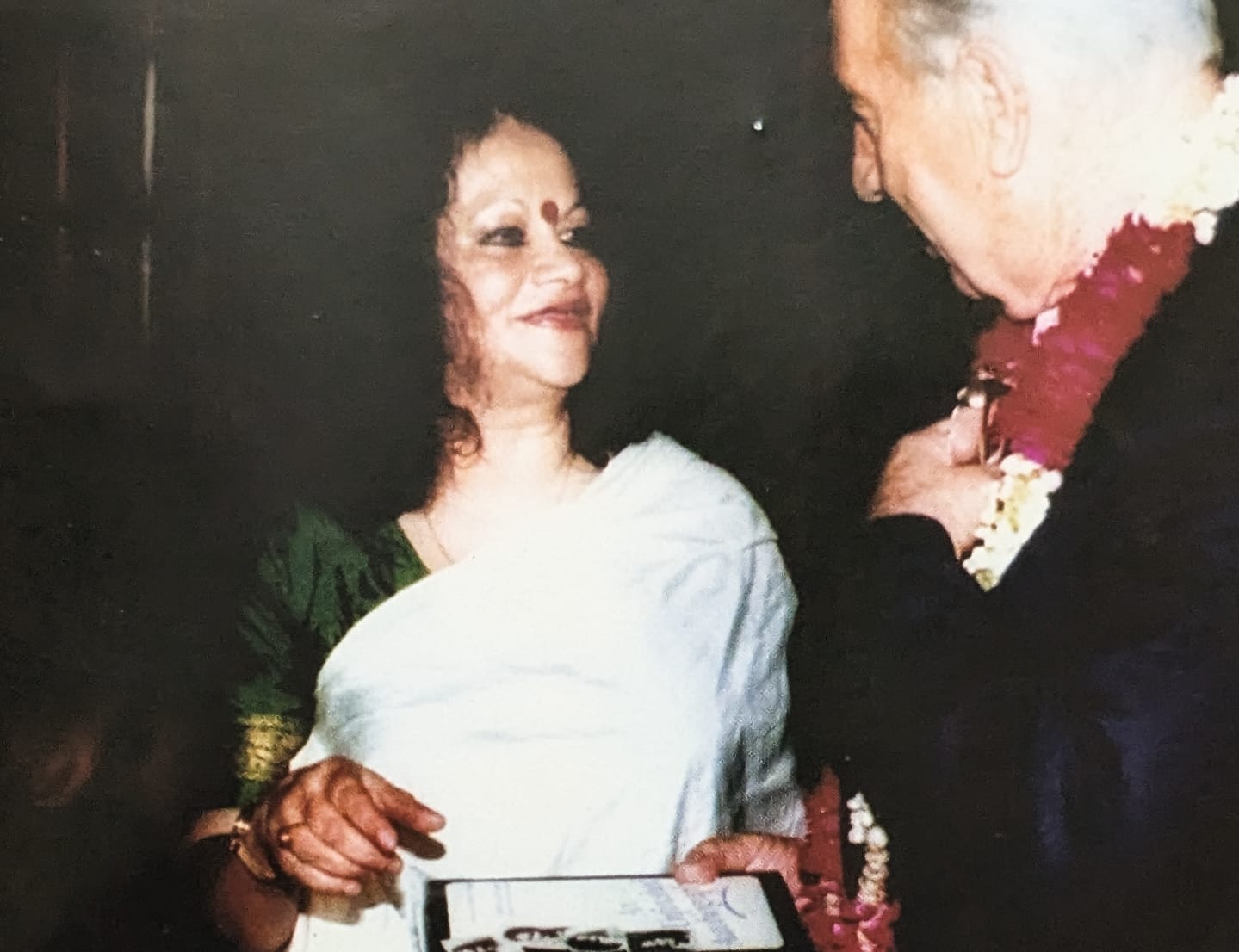
Why is Indira Goswami 'GREAT'?
Uddipana Goswami
Back in 2004, a well-read friend of mine had asked me a very unexpected question in Delhi, “Why is Indira Goswami so great a writer?” He did not read Assamese, so his introduction to Mamoni baideo’s works were through the English translations – Pages Stained With Blood, The Man from Chinnamasta and The Moth Eaten Howdah of a Tusker that he borrowed from my hostel room in Delhi because of my relentless expression of admiration for Indira Goswami. His was inquisitive, not combative, but I had found myself fumbling for an answer. I tried defending my weak statement: because it is difficult to understand what an influential writer she is without knowing Assamese literature properly; because she has influenced the style of many writers from the next generation; because she has introduced themes that were never explored in Assamese literature before; because she is difficult to translate.
I did not have a worthy reply. He had expected a literary reply: how she has modified the tradition of Assamese literature and what is the reason behind her undisputed position in Indian letters that her name is taken along with the ‘greats’, such as Mahasweta Debi and U R Ananthamurthy. Perhaps, I had fumbled because at that age, as a first year undergraduste studying in Delhi University, I did not have the vocabulary to support my argument. I wonder if I have it now, not just because of my intellectual limitations, but also because in a single or series of statements, it is difficult to capture the life of an author who is to Assamese literature what Bhupen Hazarika is to the cultural domain of Assam. She is to Assam what Toni Morrison is to America: when she speaks, Assam listens.
Mamoni Goswami’s works were not my first introduction to Assamese fiction. I read from a very early age forbidden and sanctioned novels as I used to grope in the shelves of the several almirahs my parents stored their books in. I remember, once when I had picked up Nirupama Borgohain’s Iparor Ghor Xiparor Ghor, my mother confiscated it because it had stories about women which a fifth-grader was not supposed to know. I had rebelled and read everything I wanted to by the time I had picked up the Assamese edition of the modern Indian classic The Moth Eaten Howdah of a Tusker from the All India Radio Guwahati’s dusty library shelves, without knowing what a howdah was. I had not asked if the author was Assamese, I had asked how I had never heard of the title “Raisom” before, and how was it that none of the many khuras and khuris who visited us in the evenings or to whose houses we went to drink tea did not have that title. “Mamoni”: the first name of the author could not have been anything but Assamese. Like Xeuti, Junaki, Joymoti, it was a typically Assamese name. But Raisom made me curious, even more curious for me was the word howdah and that was why I borrowed the book.
I do not remember what explanation my father had provided that day, but I remember reading the book in a few days, and crying for a long time when Giribala burnt herself to death at the end of the book: which is undoubtedly, one of the most tragic scenes ever written in modern Assamese fiction. It took that young boy of sixth grade a long time to recuperate from the shock and read the epilogue of the novel. I did not understand why the epilogue was required, and was annoyed with the author because she had “killed” Giribala.
Like her South Indian surname, Mamoni Raisom Goswami, also brought the worlds outside Assam to the realm of Assamese literature in the same way that Bhupen Hazarika made us dream about the grave of Mark Twain, the banks of the Mississippi river, about Paris and Austria with his songs. Her novels told us engaging stories about the worlds outside Assam, with a critical eye. Published during the first half of the last century, we have Dhirendranath Borthakur’s Bai Saheba set in Jhansi against the Sepoy Mutiny, Jongom by Deben Acharya set in the forests of Burma and Syed Abdul Malik’s Dukhan Nadi aru Ekhon Marubhumi set in Lucknow. But Goswami’s novels did not exoticise distant lands like her precursors: she brought the horrors home in evocative language. Her novel set in Vrindavan, the city of Lord Krishna, is a deeply critical look at Hinduism filtered through the life of abandoned widows, known as Radheshyamis. Chenabar Sot is set against the beautiful locale of Kashmir, but only to narrate a tale of the hapless condition of the working class people of the 1960’s hired by different companies to build aqueducts in the then peaceful Kashmir Valley. Similar in tone and theme is her novel Mamore Dhora Tarowal, set in Madhya Pradesh. After the publication of her autobiography, it had become next to impossible to separate her fiction from her life. Both seemed like two facets of the same coin and it created a personality cult around her. The woman who had risen like the phoenix: the two suicide attempts she describes in her autobiography are often compared with the depressive streaks that her rebellious, complex, heroines have. Saudamini’s suicide suggested in Nilakanthi Braja seems to mirror her desires when she lived as a widow in Vrindavan.
Critical reputation came undisputed to Goswami after she won the Sahitya Akademi Award in her early forties, but popularity started chasing her when books were written on her tragic, eventful life; articles were published on her life, shaping a personality cult. It was common for people from Assam travelling to Delhi with sublime or ridiculous tastes to visit her house in Chattra Marg just to get a glimpse of her. She encouraged or nurtured the careers of many young writers and this added to her colourful, admired and loved personality.
As a young high school student, when I used to see Goswami depicted in pulp fiction novels published in the monthly magazine Bismoi (which apparently has a readership of 2.2 million), it seemed quite normal at the time. But it is only now that I realise that the author who made us dream of distant lands was also a figure of extreme curiosity for the residents of Assam. The people of Assam adore her. Perhaps that is why they felt that if the reigns of the peace process remained with her, the process would remain untainted even within the murky alleys of Indian politics. Mamoni Raisom Goswami’s critical reputation was built long before I had touched a primer. As someone from the generation who never knew what it is to live outside the shadow of the gun, I did not know why Mamoni baideo is so great till the time I moved to Delhi. I got my artillery to argue about her greatness only in subsequent years when I studied literature under the shadow of red bricks and neem trees. I wonder what my friend had thought when he saw my expression – because it was so obvious to me that she is a great author. There is no need to question the fact.
In fact, in entire Assam, Mamoni Raisom Goswami’s life is an open book. Her frank Adhalekha Dastabez (An Unfinished Autobiography), written in 1988, details her battle with intense depression after her husband’s death, her nights with sleeping tablets, handfuls of which she swallowed in two attempts to end her life, and the story of how she won the struggle by immersing herself completely in her writing. It has been read widely in Assam. Even people who have not read it would know about her life, in the way everyone knows a folktale. Most of her early novels run so close to her real life that it is difficult to separate fiction from reality, especially for those who have read her autobiography.
After returning from Vrindavan, she joined the Modern Indian Language and Literary Studies department of Delhi University, and went ahead to become the Head of the Department. To honour her, the University made her the Professor Emeritus in 2009 after her retirement. It was during her stint in the national capital that she attained national prominence.
It was the quest for justice, a running thread of her oeuvre, which may have propelled her into getting involved in mediating between the separatist group, ULFA and the government; perhaps, she was the only person who both sides could trust. The government, the insurgents and the people had a firm belief that Goswami’s loyalties lay with the people of Assam.
Her efforts came at a time when the Assamese people had begun looking at the ULFA with mixed feelings. Like other Assamese, she was deeply disturbed by the Dhemaji blasts of 2004, in which the ULFA targeted a school on Independence Day, killing many children. She had been working on a novel set against the Assamese separatist movement. The bloodshed and human rights violations shook her to the core. She wanted the insurgency to end. But her desire to bring back the lost “boys” of the generation invited people to look at the militants with a new perspective, as products of the unjust eighties of Assam. Even to make this point, she used literature, not polemical rhetoric. In 2006, she edited a collection of poems by Megan Kachari alias Mithinga Daimary, a surrendered militant now, who used to head ULFA’s publicity wing. During the horrific secret killings of Assam of the late 1990s, Megan’s entire family, who had nothing to do with the separatist insurgency, was gunned down by masked gunmen, perhaps because he had refused to surrender to the government. Indira Goswami mentions in her introduction to the collection that she was stunned to find the twitches of a sensitive heart in his poems. That year, she was one of the authors invited to the Frankfurt Book Fair that was focusing on Indian Literature. She used that opportunity to release the poetry collection and tried to generate international awareness on the Assam conflict. She expressed hope that the people would look at the “terrorists” in a new light when they read their literary works.
Critics dismissed her peace efforts as a political move but she was clear about her nature of involvement from the beginning. She stressed that she was just an “observer” in spite of playing an influential role in the process. But the extreme tension caused by the peace efforts took a toll on her health. By the time she had a cerebral stroke in 2007 and was able to recover from it, she believed she had done her bit for it. Moi duwar mukoli kori disu (I have opened the doors to the discussions), she said, and was eager to get back to what she loved most: writing. Thus emerged Thengphakhri Tahsildarar Tamor Tarowal, her last novel about a Bodo woman who fought against the British.
But that first stroke was the beginning of the deterioration in her health. Even though she remained active in public life, it exhausted her. After she was hospitalised in early 2011, the endless stream of visitors to her intensive care ward overwhelmed not just her family and friends, but the hospital authorities too. Suddenly, the corridor that led to her room in the Guwahati Medical College Hospital had transformed into an equalising space where politicians in power, and out of power, came to visit her, jostling for space with innumerable unknown and known admirers.
Turning the pages of the visitors’ notebook that had filled up with thousands of greetings within days, it struck me that this is what she had hoped Assam would be one day: where everyone would be equal and united, something she had always tried to suggest with her fiction. Across Assam and in several parts of India, prayer-meets were organised by her admirers. Mass texts were circulated: forward this to people if you want her to recover; and people did. One evening when I had gone to the hospital to meet her family, I was struck by the sight of hundreds of mustard oil lamps lit by people at the entrance. It looked like Diwali.
Truly, when she spoke, 31 million people listened. May be more. I do not know of any other contemporary author in the world who has occupied such a central place and unparalleled popularity in the public imagination.
Published in Seven Sisters Post, November 30, 2011. Also published in Indira Goswami : The Passion and the Pain ed. Uddipana Goswami (Spectrum Books, 2012).
Back in 2004, a well-read friend of mine had asked me a very unexpected question in Delhi, “Why is Indira Goswami so great a writer?” He did not read Assamese, so his introduction to Mamoni baideo’s works were through the English translations – Pages Stained With Blood, The Man from Chinnamasta and The Moth Eaten Howdah of a Tusker that he borrowed from my hostel room in Delhi because of my relentless expression of admiration for Indira Goswami. His was inquisitive, not combative, but I had found myself fumbling for an answer. I tried defending my weak statement: because it is difficult to understand what an influential writer she is without knowing Assamese literature properly; because she has influenced the style of many writers from the next generation; because she has introduced themes that were never explored in Assamese literature before; because she is difficult to translate.
I did not have a worthy reply. He had expected a literary reply: how she has modified the tradition of Assamese literature and what is the reason behind her undisputed position in Indian letters that her name is taken along with the ‘greats’, such as Mahasweta Debi and U R Ananthamurthy. Perhaps, I had fumbled because at that age, as a first year undergraduste studying in Delhi University, I did not have the vocabulary to support my argument. I wonder if I have it now, not just because of my intellectual limitations, but also because in a single or series of statements, it is difficult to capture the life of an author who is to Assamese literature what Bhupen Hazarika is to the cultural domain of Assam. She is to Assam what Toni Morrison is to America: when she speaks, Assam listens.
Mamoni Goswami’s works were not my first introduction to Assamese fiction. I read from a very early age forbidden and sanctioned novels as I used to grope in the shelves of the several almirahs my parents stored their books in. I remember, once when I had picked up Nirupama Borgohain’s Iparor Ghor Xiparor Ghor, my mother confiscated it because it had stories about women which a fifth-grader was not supposed to know. I had rebelled and read everything I wanted to by the time I had picked up the Assamese edition of the modern Indian classic The Moth Eaten Howdah of a Tusker from the All India Radio Guwahati’s dusty library shelves, without knowing what a howdah was. I had not asked if the author was Assamese, I had asked how I had never heard of the title “Raisom” before, and how was it that none of the many khuras and khuris who visited us in the evenings or to whose houses we went to drink tea did not have that title. “Mamoni”: the first name of the author could not have been anything but Assamese. Like Xeuti, Junaki, Joymoti, it was a typically Assamese name. But Raisom made me curious, even more curious for me was the word howdah and that was why I borrowed the book.
I do not remember what explanation my father had provided that day, but I remember reading the book in a few days, and crying for a long time when Giribala burnt herself to death at the end of the book: which is undoubtedly, one of the most tragic scenes ever written in modern Assamese fiction. It took that young boy of sixth grade a long time to recuperate from the shock and read the epilogue of the novel. I did not understand why the epilogue was required, and was annoyed with the author because she had “killed” Giribala.
Like her South Indian surname, Mamoni Raisom Goswami, also brought the worlds outside Assam to the realm of Assamese literature in the same way that Bhupen Hazarika made us dream about the grave of Mark Twain, the banks of the Mississippi river, about Paris and Austria with his songs. Her novels told us engaging stories about the worlds outside Assam, with a critical eye. Published during the first half of the last century, we have Dhirendranath Borthakur’s Bai Saheba set in Jhansi against the Sepoy Mutiny, Jongom by Deben Acharya set in the forests of Burma and Syed Abdul Malik’s Dukhan Nadi aru Ekhon Marubhumi set in Lucknow. But Goswami’s novels did not exoticise distant lands like her precursors: she brought the horrors home in evocative language. Her novel set in Vrindavan, the city of Lord Krishna, is a deeply critical look at Hinduism filtered through the life of abandoned widows, known as Radheshyamis. Chenabar Sot is set against the beautiful locale of Kashmir, but only to narrate a tale of the hapless condition of the working class people of the 1960’s hired by different companies to build aqueducts in the then peaceful Kashmir Valley. Similar in tone and theme is her novel Mamore Dhora Tarowal, set in Madhya Pradesh. After the publication of her autobiography, it had become next to impossible to separate her fiction from her life. Both seemed like two facets of the same coin and it created a personality cult around her. The woman who had risen like the phoenix: the two suicide attempts she describes in her autobiography are often compared with the depressive streaks that her rebellious, complex, heroines have. Saudamini’s suicide suggested in Nilakanthi Braja seems to mirror her desires when she lived as a widow in Vrindavan.
Critical reputation came undisputed to Goswami after she won the Sahitya Akademi Award in her early forties, but popularity started chasing her when books were written on her tragic, eventful life; articles were published on her life, shaping a personality cult. It was common for people from Assam travelling to Delhi with sublime or ridiculous tastes to visit her house in Chattra Marg just to get a glimpse of her. She encouraged or nurtured the careers of many young writers and this added to her colourful, admired and loved personality.
As a young high school student, when I used to see Goswami depicted in pulp fiction novels published in the monthly magazine Bismoi (which apparently has a readership of 2.2 million), it seemed quite normal at the time. But it is only now that I realise that the author who made us dream of distant lands was also a figure of extreme curiosity for the residents of Assam. The people of Assam adore her. Perhaps that is why they felt that if the reigns of the peace process remained with her, the process would remain untainted even within the murky alleys of Indian politics. Mamoni Raisom Goswami’s critical reputation was built long before I had touched a primer. As someone from the generation who never knew what it is to live outside the shadow of the gun, I did not know why Mamoni baideo is so great till the time I moved to Delhi. I got my artillery to argue about her greatness only in subsequent years when I studied literature under the shadow of red bricks and neem trees. I wonder what my friend had thought when he saw my expression – because it was so obvious to me that she is a great author. There is no need to question the fact.
In fact, in entire Assam, Mamoni Raisom Goswami’s life is an open book. Her frank Adhalekha Dastabez (An Unfinished Autobiography), written in 1988, details her battle with intense depression after her husband’s death, her nights with sleeping tablets, handfuls of which she swallowed in two attempts to end her life, and the story of how she won the struggle by immersing herself completely in her writing. It has been read widely in Assam. Even people who have not read it would know about her life, in the way everyone knows a folktale. Most of her early novels run so close to her real life that it is difficult to separate fiction from reality, especially for those who have read her autobiography.
After returning from Vrindavan, she joined the Modern Indian Language and Literary Studies department of Delhi University, and went ahead to become the Head of the Department. To honour her, the University made her the Professor Emeritus in 2009 after her retirement. It was during her stint in the national capital that she attained national prominence.
It was the quest for justice, a running thread of her oeuvre, which may have propelled her into getting involved in mediating between the separatist group, ULFA and the government; perhaps, she was the only person who both sides could trust. The government, the insurgents and the people had a firm belief that Goswami’s loyalties lay with the people of Assam.
Her efforts came at a time when the Assamese people had begun looking at the ULFA with mixed feelings. Like other Assamese, she was deeply disturbed by the Dhemaji blasts of 2004, in which the ULFA targeted a school on Independence Day, killing many children. She had been working on a novel set against the Assamese separatist movement. The bloodshed and human rights violations shook her to the core. She wanted the insurgency to end. But her desire to bring back the lost “boys” of the generation invited people to look at the militants with a new perspective, as products of the unjust eighties of Assam. Even to make this point, she used literature, not polemical rhetoric. In 2006, she edited a collection of poems by Megan Kachari alias Mithinga Daimary, a surrendered militant now, who used to head ULFA’s publicity wing. During the horrific secret killings of Assam of the late 1990s, Megan’s entire family, who had nothing to do with the separatist insurgency, was gunned down by masked gunmen, perhaps because he had refused to surrender to the government. Indira Goswami mentions in her introduction to the collection that she was stunned to find the twitches of a sensitive heart in his poems. That year, she was one of the authors invited to the Frankfurt Book Fair that was focusing on Indian Literature. She used that opportunity to release the poetry collection and tried to generate international awareness on the Assam conflict. She expressed hope that the people would look at the “terrorists” in a new light when they read their literary works.
Critics dismissed her peace efforts as a political move but she was clear about her nature of involvement from the beginning. She stressed that she was just an “observer” in spite of playing an influential role in the process. But the extreme tension caused by the peace efforts took a toll on her health. By the time she had a cerebral stroke in 2007 and was able to recover from it, she believed she had done her bit for it. Moi duwar mukoli kori disu (I have opened the doors to the discussions), she said, and was eager to get back to what she loved most: writing. Thus emerged Thengphakhri Tahsildarar Tamor Tarowal, her last novel about a Bodo woman who fought against the British.
But that first stroke was the beginning of the deterioration in her health. Even though she remained active in public life, it exhausted her. After she was hospitalised in early 2011, the endless stream of visitors to her intensive care ward overwhelmed not just her family and friends, but the hospital authorities too. Suddenly, the corridor that led to her room in the Guwahati Medical College Hospital had transformed into an equalising space where politicians in power, and out of power, came to visit her, jostling for space with innumerable unknown and known admirers.
Turning the pages of the visitors’ notebook that had filled up with thousands of greetings within days, it struck me that this is what she had hoped Assam would be one day: where everyone would be equal and united, something she had always tried to suggest with her fiction. Across Assam and in several parts of India, prayer-meets were organised by her admirers. Mass texts were circulated: forward this to people if you want her to recover; and people did. One evening when I had gone to the hospital to meet her family, I was struck by the sight of hundreds of mustard oil lamps lit by people at the entrance. It looked like Diwali.
Truly, when she spoke, 31 million people listened. May be more. I do not know of any other contemporary author in the world who has occupied such a central place and unparalleled popularity in the public imagination.
Published in Seven Sisters Post, November 30, 2011. Also published in Indira Goswami : The Passion and the Pain ed. Uddipana Goswami (Spectrum Books, 2012).
Stay up-to-date
Related Post
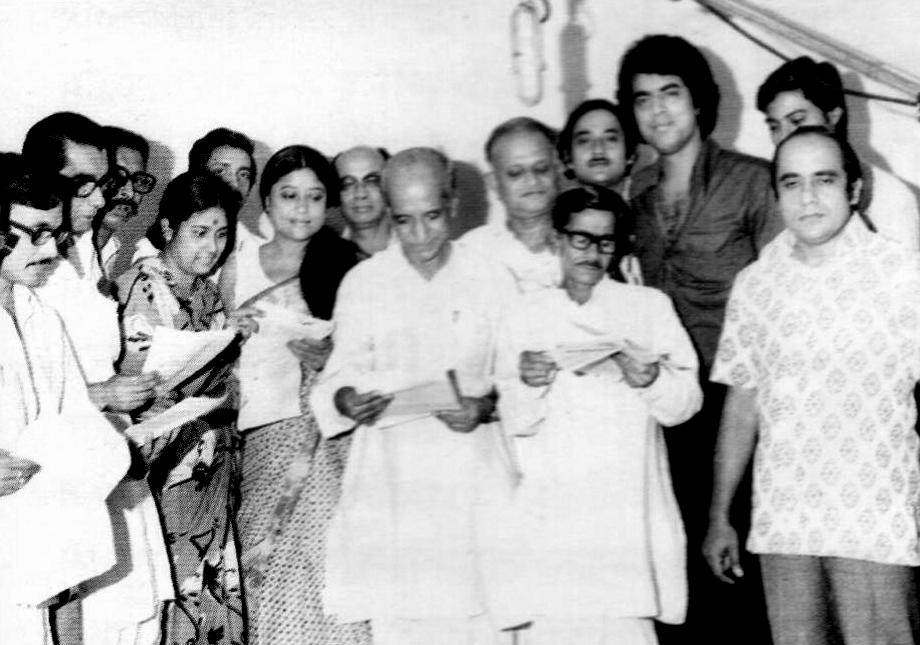
Listeners of an earlier era still fondly recall waiting eagerly for the broadcast of immensely popular plays and serials from the AIR Guwahati Centre. In the 1960s, eminent playwright Dr. Bhubendra Nath Saikia made invaluable contributions along with noted dramatists like Prafulla Bora, Ghana Hazarika, Mahendra Barthakur, Arup Barthakur, Akhil Chakravarty, and the versatile Arun Sarma.
Since my relationship with All India Radio began through modern songs and through my interactions with singers, lyricists, and composers, I would like to briefly discuss the role that All India Radio has played in the creation, development, and popularity of Assamese modern songs.
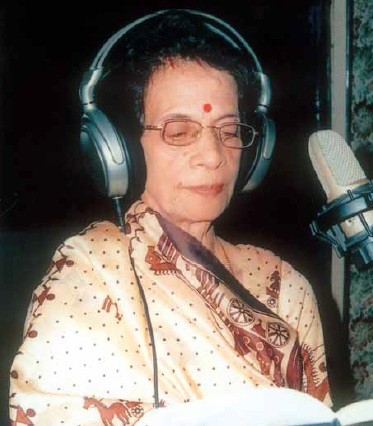
Thus this way Lakshyaheera earned her nicknames ‘Sanu’, ‘Posaki’ etc. In the wonderful environment of Sualkuchi Lakshyaheera grew up. She spent her childhood in the centre of vaishnavite culture and tradition at Barpeta and the cultural capital of Assam- Tezpur.
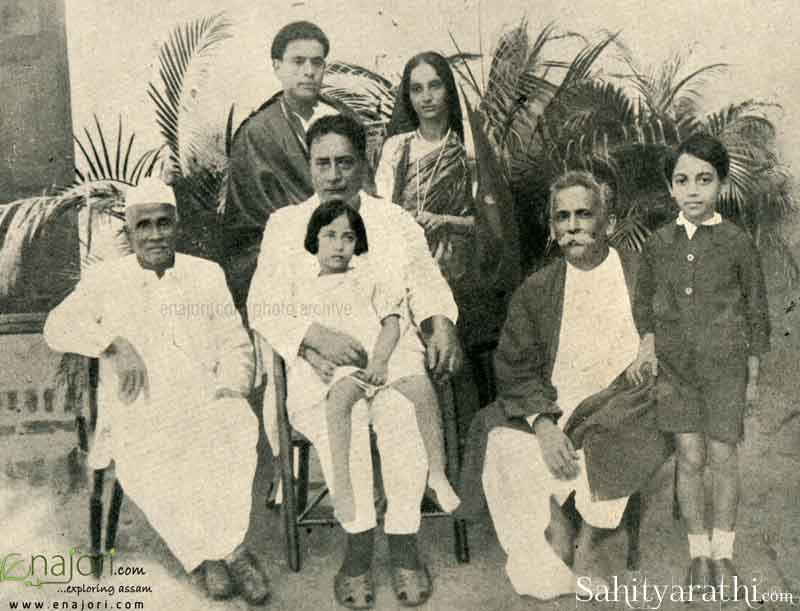
Ritha Devi was also the first woman to have been taught the sacred Sattriya Nritya of Assam, and the first dancer to take it out of Assam and out of India. She has also studied some other traditional dances of Assam, like the Deodhani and the Deonati, which were almost on the verge of extinction, and was again the first dancer to showcase them in the international platform.