It was around April, 1960. I was then a student of Assamese honours in Cotton College. Dipali was a year junior to me. Some of the other students of my time were Nizara and Kiran from Tezpur, Nirmali and MuktiDey from Guwahati etc. Among them, two of them were famous for singing. They were DipaliBorthakur and MuktiDey. Both of them were best singers. We listened to their songs making them sit in the common room.
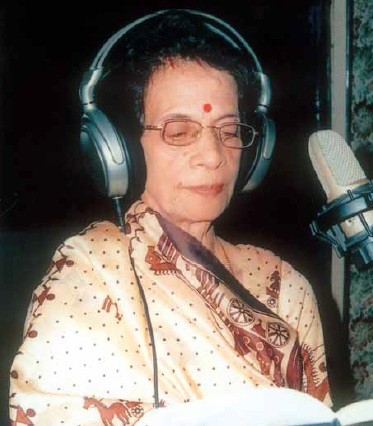
Dipali had a magic in her voice. I remember quite well – one night while I was walking through a deserted lane, I could suddenly hear Dipali singing in some function. Dipali’s voice in that deserted road created a beautiful atmosphere. That day, love and mystery mixed together, creating indefinite thoughts in my mind. An echo of a human heart can illuminate many other hearts. Dipali’s voice had that divine power. Therefore I too cannot forget those days.
Dipali sometimes used to come to our house while studying in Cotton. Sitting beside my mother late Ambika Devi, she sang the songs she loved. My mother had quite a lot of interest in music. She used to sing RabindraSangeet sitting with our UnclePrafullaGoswami giving music to them herself(sitting with our uncle…she used to sing ravnidra sangeet to which she used to give music herself). She always carried a small notebook where she put down Rabindrasangeet. She(My mother) said that Dipali’s voice can could melt even a stoned heart. Music can unite everyone, irrespective of friend and foe. Mother was right. Those who heard Dipali sing at that time, they definitely can surely could never forget that voice.
While I was studying Ramayana, I got proof in many places how music keeps on flowing in the hearts of even the (most?) strict and huge personalities. I could see(notice) the effect of Ramayana in Mauritius, Port-of-Spain in Trinidad, Bali etc. while I was travelling to those places. I heard many fascinating stories of Ramayana and music.
There was a legend in India too – about the character of Ravana in Ramayana. Ravana was a warrior. He conquered many states. But Ravana was a very cruel and proud person. He drank human blood just like wine. A mountain made of human ash was also seen in Dandakaranya. Those were the leftovers of humans whom the demons ate. But (even?) such a demon king Ravana was heavily inclined towards music. Once while roaming in the jungles of Himalaya, he suddenly slipped from the peak of the Kailash Mountain. He somehow managed not to fall down but to hang clutching by clinging on to a large rock. To save himself from the imminent death, he started singing in the praise of Lord Shiva. But he also needed a musical instrument for that. Therefore Ravana cut out one of his twenty hands and one of his ten heads. He also then cut and pulled out a nerve from his body. Tying this nerve to the head, he created the musical instrument Iktara. He started praying Lord Shiva by playing this Iktara. A satisfied Lord Shiva saved him from this imminent death.
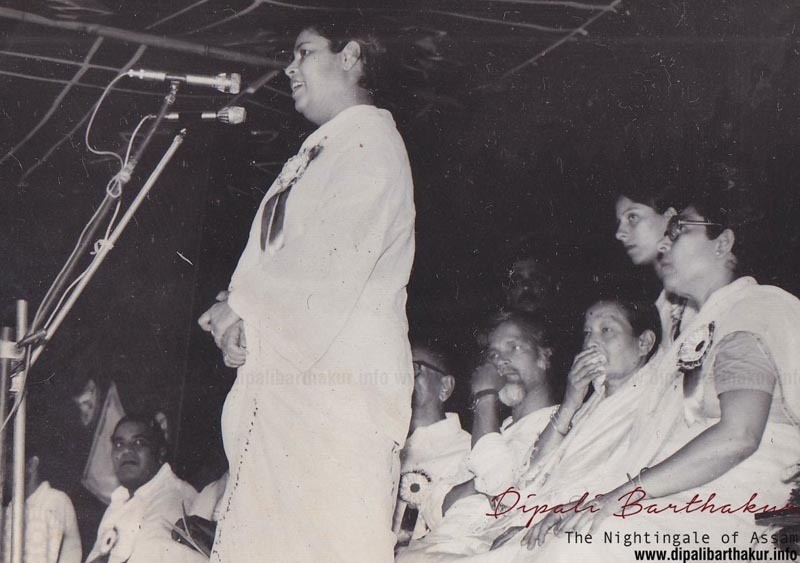
I met DipaliBorthakur for the last time in a felicitation function organized by a club in Nagaon named ‘Kishalaya’. Apart from her, her husband and a renowned artist NilpabanBarua, our respected poet NabakantaBarua and I was were also felicitated in the meeting. I could well understand notice Dipali’s physical illness that day. I felt a pain in my heart seeing her. Why did this happen to Dipali? She could have brought elixir of life in this bloody world with many more songs.
People say – an echo of Omkar is always heard at the peak of the Himalaya(s). I feel, an echo of Dipali’s voice too will always remain in the sky skies of Assam. Her voice was really magnificent.
It was around April, 1960. I was then a student of Assamese honours in Cotton College. Dipali was a year junior to me. Some of the other students of my time were Nizara and Kiran from Tezpur, Nirmali and MuktiDey from Guwahati etc. Among them, two of them were famous for singing. They were DipaliBorthakur and MuktiDey. Both of them were best singers. We listened to their songs making them sit in the common room.
Dipali had a magic in her voice. I remember quite well – one night while I was walking through a deserted lane, I could suddenly hear Dipali singing in some function. Dipali’s voice in that deserted road created a beautiful atmosphere. That day, love and mystery mixed together, creating indefinite thoughts in my mind. An echo of a human heart can illuminate many other hearts. Dipali’s voice had that divine power. Therefore I too cannot forget those days.
Dipali sometimes used to come to our house while studying in Cotton. Sitting beside my mother late Ambika Devi, she sang the songs she loved. My mother had quite a lot of interest in music. She used to sing RabindraSangeet sitting with our UnclePrafullaGoswami giving music to them herself(sitting with our uncle…she used to sing ravnidra sangeet to which she used to give music herself). She always carried a small notebook where she put down Rabindrasangeet. She(My mother) said that Dipali’s voice can could melt even a stoned heart. Music can unite everyone, irrespective of friend and foe. Mother was right. Those who heard Dipali sing at that time, they definitely can surely could never forget that voice.
While I was studying Ramayana, I got proof in many places how music keeps on flowing in the hearts of even the (most?) strict and huge personalities. I could see(notice) the effect of Ramayana in Mauritius, Port-of-Spain in Trinidad, Bali etc. while I was travelling to those places. I heard many fascinating stories of Ramayana and music.
There was a legend in India too – about the character of Ravana in Ramayana. Ravana was a warrior. He conquered many states. But Ravana was a very cruel and proud person. He drank human blood just like wine. A mountain made of human ash was also seen in Dandakaranya. Those were the leftovers of humans whom the demons ate. But (even?) such a demon king Ravana was heavily inclined towards music. Once while roaming in the jungles of Himalaya, he suddenly slipped from the peak of the Kailash Mountain. He somehow managed not to fall down but to hang clutching by clinging on to a large rock. To save himself from the imminent death, he started singing in the praise of Lord Shiva. But he also needed a musical instrument for that. Therefore Ravana cut out one of his twenty hands and one of his ten heads. He also then cut and pulled out a nerve from his body. Tying this nerve to the head, he created the musical instrument Iktara. He started praying Lord Shiva by playing this Iktara. A satisfied Lord Shiva saved him from this imminent death.
I met DipaliBorthakur for the last time in a felicitation function organized by a club in Nagaon named ‘Kishalaya’. Apart from her, her husband and a renowned artist NilpabanBarua, our respected poet NabakantaBarua and I was were also felicitated in the meeting. I could well understand notice Dipali’s physical illness that day. I felt a pain in my heart seeing her. Why did this happen to Dipali? She could have brought elixir of life in this bloody world with many more songs.
People say – an echo of Omkar is always heard at the peak of the Himalaya(s). I feel, an echo of Dipali’s voice too will always remain in the sky skies of Assam. Her voice was really magnificent.