
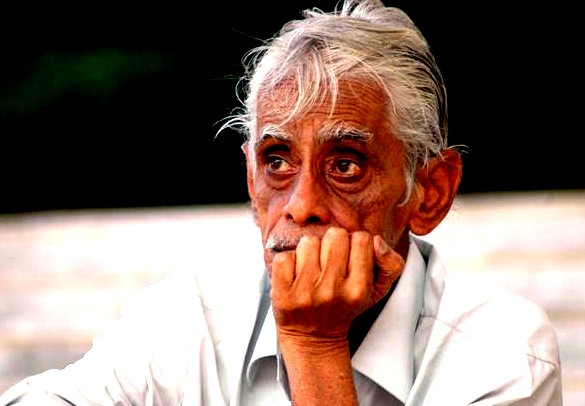
Paintings of Poet Hiru Da
Pankaj Gobinda Medhi
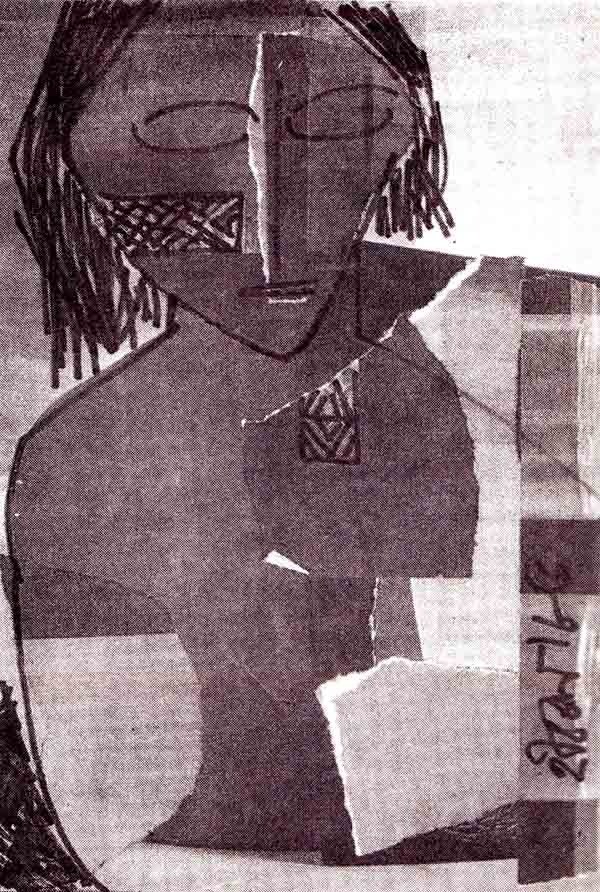
The paintings of Poet Hiru da bring to our mind the majestic display of infinite greens. And between them are the hints of faint blue and red colour. Amid the flanking greens, the splashes of red and blue colour here and there create an illusion. Eloquent! We can define poet Hiru da's paintings into two categories - polished and unpolished. The paintings which were Hiru da's spontaneous creations can be considered as unpolished. These include the art works of cover pages for books done by him. His unpolished work not only portrays a disorderliness of medium, but also dissimilarity of subject matter. The pictures drawn by Hiru da using sketch pen or pencil on the easily available chits of colourful papers which he tore and designed like collage can undoubtedly be considered among his unpolished works. The credibility of such paintings is dubious. Poet Hiru Da too had realized that. And which is why at different times, he remarked- I do not paint. Those who were associated with him could hear this from time to time.
On the contrary, Poet Hiru Da drew polished paintings too. These paintings, influenced by his mind were not only meaningful but also depict the concrete expressions rendered by the touch of skilled artisan's hands. In these paintings by Poet Hiru da, one could see the smooth use of colours, the correct quantitative blend of various colours and above all, as it transpires, these pictures could ably beckon an observer to the wonderful world of vivid colours. Those pictures of Hiru da which can be considered as polished very proudly represented the field of contemporary Assamese art.
Poet Hiru da in his lifetime had once organized an art exhibition. Although the Assamese intellectual society was aware of this exhibition, it however seemed that the exhibition was disregarded. After Hiru da's demise, it was observed that in his biography, the fact about Hiru da's art exhibition was nowhere to be mentioned and was disdained. The exhibition titled 'Paintings by poet Hiren Bhattacharya' was organized at Nalbari's 'Sri Bharati Sangrahaloy's Pakobi'06 Art Gallery, on 15 November, in the year 2009. The exhibition had ten different paintings by Poet Hiru da, each of different gesture and different media. These paintings were untitled. All of these paintings are in acrylic medium. Three of these paintings were drawn on paper while the rest of them on canvas. The paintings on paper were sized 21 X 28.5 cms. Two of the paintings on canvas were sized 35.5 X 45.5 cms, another two were of 41 X 51 cms sizes and the remaining on canvas were sized 45.5 X 76 cms respectively. One would comprehend that his paintings on canvas being larger in size let Hiru da wander freely in his aesthetic world of art. Most of his paintings were pertaining to nature. One of his paintings depicts a small boy from the rear, standing in the tentative transitory path between childhood and youth while another painting depicted a girl with a red bindi on her forehead. She had those eyes like a pair of fishes. The painting of the small boy staring at the horizon is one of his most significant paintings and a venerable one in the world of contemporary Assamese art.
Poet Hiru da's exhibition was inaugurated by Anuradha Sarma Puzari, editor of 'Sadin' and 'Satsori'. She wrote- ' Poet Hiren Bhattacharya's paintings were released for the first time in this small art gallery situated at Nalbari. Pankaj invited me to this exhibition along with Poet Hiren Bhattacharya. I could not refuse his invitation. By being present at Pankaj's 'Ratnajini Khetra', I could meet the distinguished personae of Nalbari's intellectual society. The exhibition was thronged by lovers of art and culture. Inaugurating the exhibition hall, I stood amazed. Poet Hiren Bhattacharya's paintings had plethora of green colour; an amazing fair of dark and light greens. I have read his poems wherein at various instances; he has represented love in green colour. But now his paintings have spoken for his poems. The lust of men, river, fields colours green, the lyrical sounds of singing birds, the fragrance of flowers are all green in colour, losing this essence of green makes human inhuman, trees perish, songs transforms into gun. As if Poet Hiren Bhattacharya is trying to capture the gradually losing greens in his canvas. So every canvas bears the infinite touch of green. Being the first one to have a glimpse of these paintings, I consider myself lucky. Then it was followed by intimate conversations in the open yard. Those who could not manage to get a seat enjoyed the program being bystander in the nearby road. Although devoid of a stage, it had the intimate touch of likeminded people and the essence of close conversation. These are intimate conversations in the real sense. '
The success of Poet Hiren Bhattacharya as an artist is noteworthy, just like a poet. The future generations would remember him not only as a poet but also as a painter.
Translation by Arunabh Sharma for enajori.com
The paintings of Poet Hiru da bring to our mind the majestic display of infinite greens. And between them are the hints of faint blue and red colour. Amid the flanking greens, the splashes of red and blue colour here and there create an illusion. Eloquent! We can define poet Hiru da's paintings into two categories - polished and unpolished. The paintings which were Hiru da's spontaneous creations can be considered as unpolished. These include the art works of cover pages for books done by him. His unpolished work not only portrays a disorderliness of medium, but also dissimilarity of subject matter. The pictures drawn by Hiru da using sketch pen or pencil on the easily available chits of colourful papers which he tore and designed like collage can undoubtedly be considered among his unpolished works. The credibility of such paintings is dubious. Poet Hiru Da too had realized that. And which is why at different times, he remarked- I do not paint. Those who were associated with him could hear this from time to time.
On the contrary, Poet Hiru Da drew polished paintings too. These paintings, influenced by his mind were not only meaningful but also depict the concrete expressions rendered by the touch of skilled artisan's hands. In these paintings by Poet Hiru da, one could see the smooth use of colours, the correct quantitative blend of various colours and above all, as it transpires, these pictures could ably beckon an observer to the wonderful world of vivid colours. Those pictures of Hiru da which can be considered as polished very proudly represented the field of contemporary Assamese art.
Poet Hiru da in his lifetime had once organized an art exhibition. Although the Assamese intellectual society was aware of this exhibition, it however seemed that the exhibition was disregarded. After Hiru da's demise, it was observed that in his biography, the fact about Hiru da's art exhibition was nowhere to be mentioned and was disdained. The exhibition titled 'Paintings by poet Hiren Bhattacharya' was organized at Nalbari's 'Sri Bharati Sangrahaloy's Pakobi'06 Art Gallery, on 15 November, in the year 2009. The exhibition had ten different paintings by Poet Hiru da, each of different gesture and different media. These paintings were untitled. All of these paintings are in acrylic medium. Three of these paintings were drawn on paper while the rest of them on canvas. The paintings on paper were sized 21 X 28.5 cms. Two of the paintings on canvas were sized 35.5 X 45.5 cms, another two were of 41 X 51 cms sizes and the remaining on canvas were sized 45.5 X 76 cms respectively. One would comprehend that his paintings on canvas being larger in size let Hiru da wander freely in his aesthetic world of art. Most of his paintings were pertaining to nature. One of his paintings depicts a small boy from the rear, standing in the tentative transitory path between childhood and youth while another painting depicted a girl with a red bindi on her forehead. She had those eyes like a pair of fishes. The painting of the small boy staring at the horizon is one of his most significant paintings and a venerable one in the world of contemporary Assamese art.
Poet Hiru da's exhibition was inaugurated by Anuradha Sarma Puzari, editor of 'Sadin' and 'Satsori'. She wrote- ' Poet Hiren Bhattacharya's paintings were released for the first time in this small art gallery situated at Nalbari. Pankaj invited me to this exhibition along with Poet Hiren Bhattacharya. I could not refuse his invitation. By being present at Pankaj's 'Ratnajini Khetra', I could meet the distinguished personae of Nalbari's intellectual society. The exhibition was thronged by lovers of art and culture. Inaugurating the exhibition hall, I stood amazed. Poet Hiren Bhattacharya's paintings had plethora of green colour; an amazing fair of dark and light greens. I have read his poems wherein at various instances; he has represented love in green colour. But now his paintings have spoken for his poems. The lust of men, river, fields colours green, the lyrical sounds of singing birds, the fragrance of flowers are all green in colour, losing this essence of green makes human inhuman, trees perish, songs transforms into gun. As if Poet Hiren Bhattacharya is trying to capture the gradually losing greens in his canvas. So every canvas bears the infinite touch of green. Being the first one to have a glimpse of these paintings, I consider myself lucky. Then it was followed by intimate conversations in the open yard. Those who could not manage to get a seat enjoyed the program being bystander in the nearby road. Although devoid of a stage, it had the intimate touch of likeminded people and the essence of close conversation. These are intimate conversations in the real sense. '
The success of Poet Hiren Bhattacharya as an artist is noteworthy, just like a poet. The future generations would remember him not only as a poet but also as a painter.
Translation by Arunabh Sharma for enajori.com
Stay up-to-date
Related Post
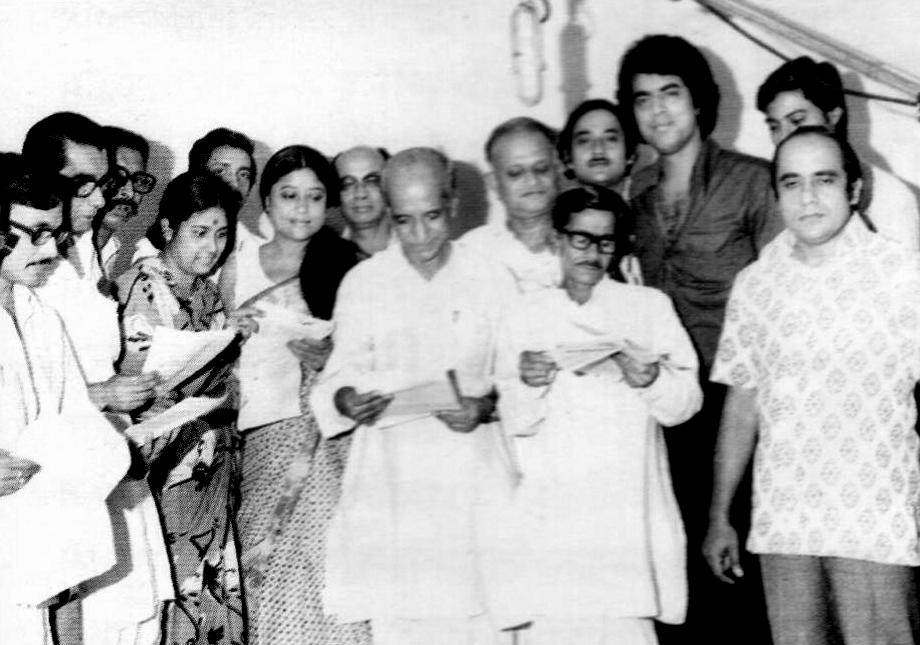
Listeners of an earlier era still fondly recall waiting eagerly for the broadcast of immensely popular plays and serials from the AIR Guwahati Centre. In the 1960s, eminent playwright Dr. Bhubendra Nath Saikia made invaluable contributions along with noted dramatists like Prafulla Bora, Ghana Hazarika, Mahendra Barthakur, Arup Barthakur, Akhil Chakravarty, and the versatile Arun Sarma.
Since my relationship with All India Radio began through modern songs and through my interactions with singers, lyricists, and composers, I would like to briefly discuss the role that All India Radio has played in the creation, development, and popularity of Assamese modern songs.
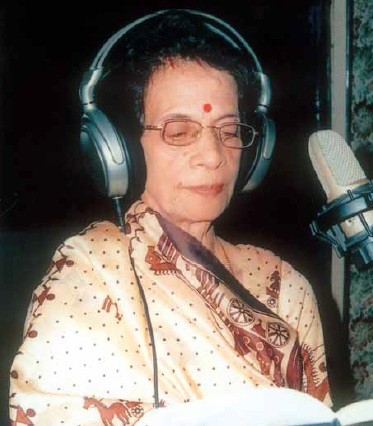
Thus this way Lakshyaheera earned her nicknames ‘Sanu’, ‘Posaki’ etc. In the wonderful environment of Sualkuchi Lakshyaheera grew up. She spent her childhood in the centre of vaishnavite culture and tradition at Barpeta and the cultural capital of Assam- Tezpur.
Ritha Devi was also the first woman to have been taught the sacred Sattriya Nritya of Assam, and the first dancer to take it out of Assam and out of India. She has also studied some other traditional dances of Assam, like the Deodhani and the Deonati, which were almost on the verge of extinction, and was again the first dancer to showcase them in the international platform.